
‘Omics in Model Organisms
Our theme for February 2026, our fifth edition of BAtl, is ‘Omics in Model Organisms. We will explore the techniques of indexing and mapping cell fates in Drosophila melanogaster and specifically investigate neuronal identity, sexual dimorphism and the Abnormal Spindle (Asp) interactomes in developing organisms.
This seminar will be presented in a Hybrid format: in-person at Mount Saint Vincent University in Halifax NS and online via Microsoft Teams. The seminar will be followed by an in-person social event at Mount Saint Vincent University. We hope you’ll join us to network with our speakers and peers!
We are offering bursaries of up to $100 CAD for caregivers who are interested in attending BAtl seminars in person to offset costs of caregiving responsibilities. One person can be eligible for multiple bursaries.
Schedule
| Time (ADT) | Event | Format | Location |
|---|---|---|---|
| 17:00 | Seminar | Hybrid | In-person: Rosaria Boardroom (ROS 312), Rosaria Student Center, Mount Saint Vincent University, 131 Lumpkin Rd, Halifax, NS Virtual: MS Teams |
| 18:00 | Social Event | In-person | Rosaria Boardroom (ROS 312), Rosaria Student Center, Mount Saint Vincent University, 131 Lumpkin Rd, Halifax, NS |
Meet our Speakers

Erin M. Allen (she/her), Postdoctoral Researcher at
University of Oxford
Dr. Allen received a PhD in molecular biology and behavioural genetics from the University of Toronto. Working under the supervision of Prof. Marla Sokolowski, this work focused on the molecular genetics of feeding behaviour in the invertebrate genetic model system Drosophila melanogaster, decoding the cis-regulatory elements of the foraging gene underlying its pleiotropy. Since then, Dr. Allen has been a postdoctoral fellow at the Centre for Neural Circuits and Behaviour at the University of Oxford, working with Prof. Stephen Goodwin. Dr. Allen’s primary research focus is on the fundamental biological processes that drive sex differences in the development and maintenance of the brain in Drosophila melanogaster. Even though sexual dimorphism is a common feature in many organisms, research into these differences is often overlooked. Dr. Allen uses state-of-the-art techniques, such as single-cell transcriptomics and neuroconnectomics, to answer questions about sex differences in the neurobiology and behaviour of the fly at single-cell resolution.
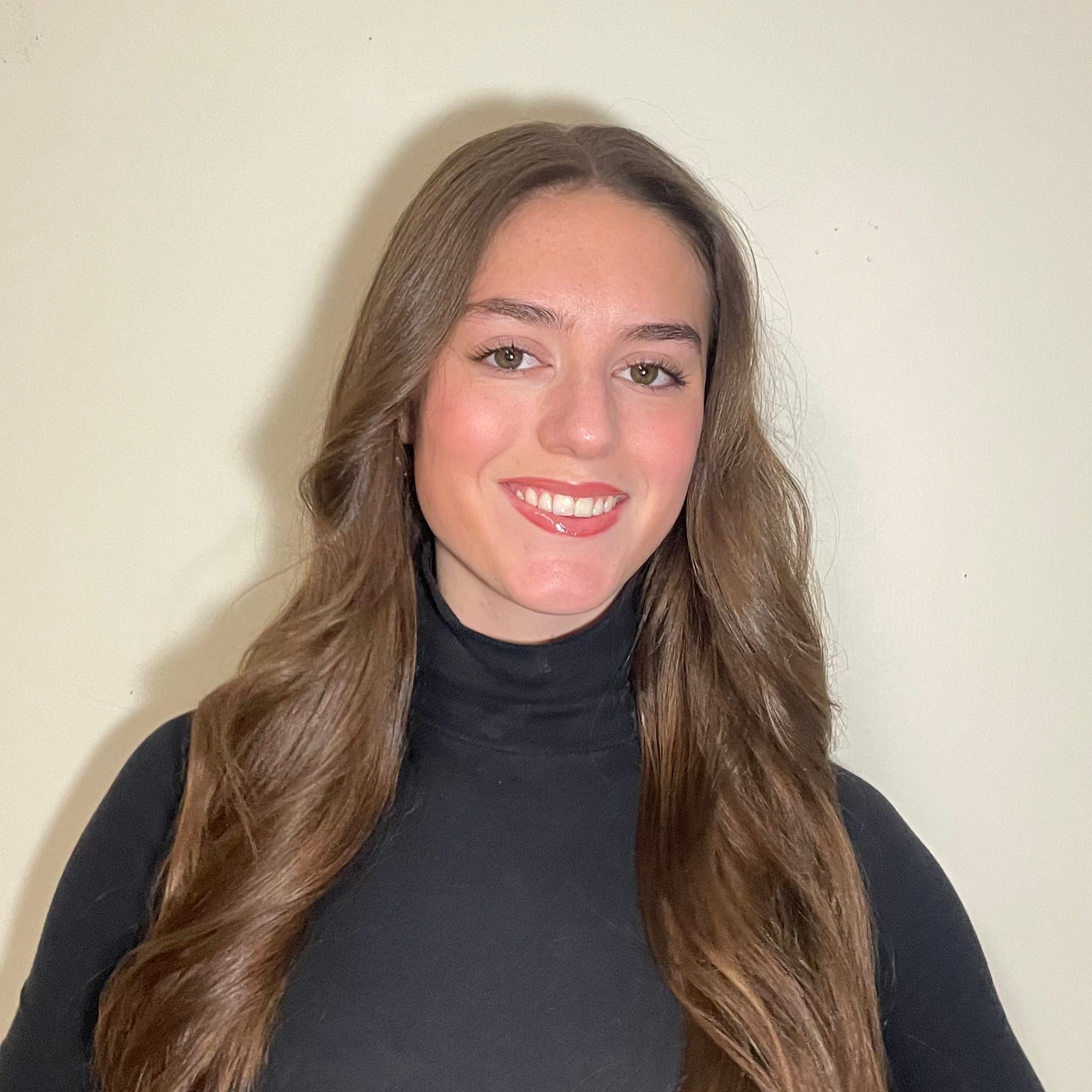
Emma Renouf (she/her), Honours Student at
Mount Saint Vincent University
I am a fourth-year undergraduate Honours Biology student at Mount Saint Vincent
University. Under the supervision of Dr. Lori Borgal, my research uses Drosophila
melanogaster as a model organism to study the gene abnormal spindle (asp) and its
protein product Asp, which is involved in spindle microtubule assembly and cell
proliferation. My project focuses on investigating interactome differences when the
subcellular localization of Asp is altered due to point mutation. This research aims to
better understand how changes in Asp localization affect protein interactions and
cellular function.
Meet our Host:

Lori Borgal (she/her), Assistant Professor at Mount Saint Vincent University
Dr. Borgal received a PhD from the University of Cologne, Germany, in the lab of Dr. Bernhard Schermer & Dr. Thomas Benzing (Nephrolab Cologne), where she used human cell culture as a model system to study how a cellular “antenna” called the primary cilium influences response to cell proliferation signals. Dr. Borgal then received Royal Society funding to pursue postdoctoral research at the University of Exeter, UK, hosted by Dr. James Wakefield, where she used Drosophila melanogaster as a model system to study how the mitotic spindle forms in different stem cell populations. Dr. Borgal now leads the Cell Proliferation Lab at MSVU in Halifax, NS, using both human cell culture and Drosophila as model systems to investigate how stem cell progeny are able to proliferate at a “just right” amount to maintain adult tissue, and how disrupting this molecular control may contribute to cancer.
